



ShopStreet News
How to Create a Safe Toddler Indoor Playroom in Ireland (Complete Buying Guide)

Mar
The Complete Guide to Creating a Toddler Playroom in Ireland
The best way to set up a toddler playroom in Ireland is to create a safe, flexible space that encourages independent movement, practical life skills and active play indoors. Choose stable, durable equipment suited to your child’s age, prioritise floor protection and layout, and design the area to work realistically within your home and daily routine.
Indoor Play Ideas for Toddlers in Ireland
Shop Children & PlayA thoughtful toddler indoor playroom can make everyday family life easier while supporting your child’s development through safe and engaging indoor play. In Ireland, where outdoor play can be limited by weather, a practical home play space helps keep children active, curious and confident throughout the year. This guide offers advice on choosing toddler play equipment, arranging your space and selecting durable furniture for real family life.




Why do toddlers benefit from a dedicated indoor play area?
Toddlers benefit from a dedicated indoor play area because it supports consistent movement, independence and focused play in a safe, controlled environment. In Ireland, where wet weather and shorter winter days often limit outdoor time, a well-designed indoor space becomes especially important.
Between the ages of one and four, children develop balance, coordination, spatial awareness and problem-solving skills rapidly. When they have access to equipment that allows climbing, pushing, building, pouring and pretending, they practise these skills naturally through play.
A dedicated area also helps toddlers understand boundaries. When play has a defined space, children are more likely to settle into activities independently. This encourages confidence and reduces constant adult direction.
- Supports gross and fine motor development
- Encourages independent play
- Provides movement opportunities during wet weather
- Reduces frustration and boredom indoors
- Creates predictable daily structure
What should every toddler playroom include?
Every toddler playroom should include:
- Safe climbing or movement equipment
- Soft floor protection
- Open-ended imaginative play items
- Comfortable seating or quiet space
- Accessible storage at child height
A balanced play space combines movement, creativity and rest. Toddlers need opportunities to climb, crawl and balance. They also benefit from pretend play areas, such as a small kitchen or role-play corner.
Floor protection is essential in Irish homes where timber floors and tiles are common. Washable mats or cushioned surfaces reduce noise and protect both children and flooring.
Finally, equipment should be arranged so the child can access it independently. Open shelves and low storage promote autonomy and reduce reliance on adults to retrieve toys.
What is the safest indoor play equipment for toddlers?
The safest indoor play equipment for toddlers is stable, made from durable materials, age-appropriate and used under suitable supervision. Safety is about thoughtful design rather than eliminating all challenge.
Stability
Equipment should sit firmly on the floor without rocking or tipping. Wide bases and solid construction reduce movement during climbing or standing activities.
Materials
Look for smooth finishes, non-toxic materials and fabrics that can be cleaned easily. Foam elements should be dense enough to provide support while still cushioning falls.
Age suitability
Choose equipment designed specifically for toddlers rather than older children. Height, grip spacing and surface angles should match early developmental stages.
Supervision
No indoor equipment replaces adult awareness. Toddlers benefit most when parents introduce equipment gradually and model safe use.
Floor protection
Play mats or cushioned flooring reduce impact and help prevent slipping, especially on tiled or wooden floors common in Irish homes.
- Stable base
- Durable construction
- Clear age guidance
- Washable surfaces
- Used with supervision
How do Montessori principles apply to a home playroom?
Montessori play focuses on independence, movement and hands-on learning. In a home playroom, this means providing child-height equipment that allows toddlers to participate actively rather than passively.
A Montessori-style space encourages children to climb safely, prepare simple snacks with supervision, tidy their materials and choose activities independently. The room should be calm, uncluttered and purposeful.
This does not require a perfect aesthetic. It requires thoughtful layout, accessible storage and equipment that supports real skills such as balancing, pouring, building and imaginative role-play.
- Child-accessible layout
- Movement-based learning
- Real-life practical activities
- Simple, orderly environment
How can Irish parents create a play space in a small home?
Irish parents can create a functional play space in a small home by prioritising vertical storage, modular equipment and multi-use furniture.
Apartments
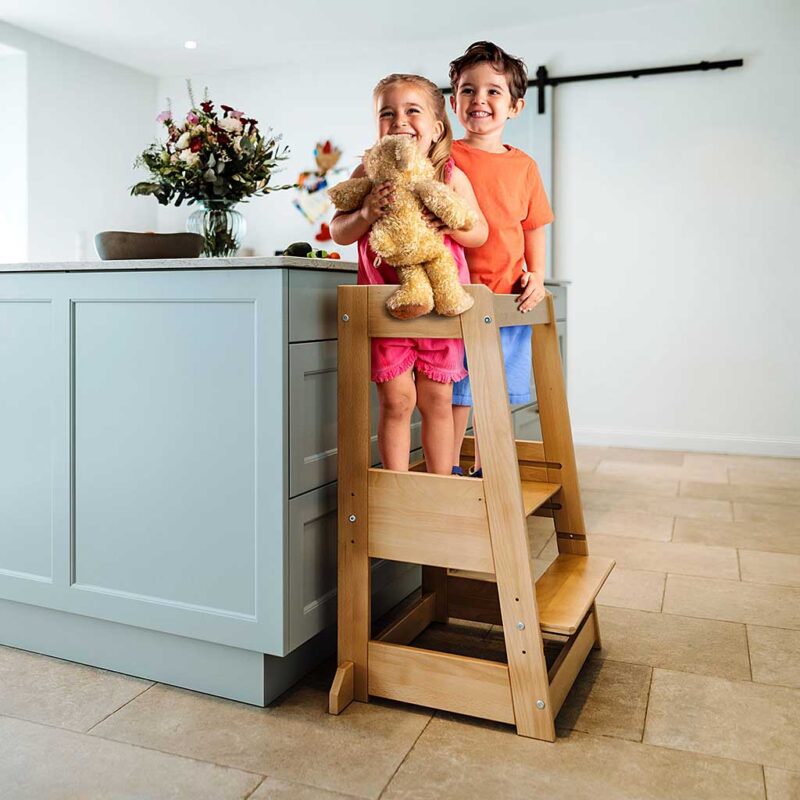
Use foldable or stackable items that can be stored against a wall when not in use. Compact climbing frames and modular foam pieces work well in limited square footage. A multifunction 4-in-1 Montessori-inspired kitchen learning tower that transforms into a slide, a child-sized table with chair and a blackboard will provide many play elements in one space saving toy. Mini Play Sofas & Pocket Play Sofas are ideal where space is at a premium
Shared living rooms
Choose neutral-toned equipment that blends with existing décor. Soft play sofas and pouffes can double as everyday seating.
Storage solutions
Low baskets and open shelving allow children to tidy independently while keeping the room manageable.
Modular furniture
Modular pieces adapt as your child grows, reducing the need for constant replacement and making better use of space.
- Choose foldable or modular designs
- Use wall space efficiently
- Blend play items into daily living areas
- Limit clutter through rotation
Kitchen learning towers
Kitchen towers, often called learning towers, are raised platforms that allow toddlers to stand safely at counter height while supervised. They support participation in everyday tasks such as baking, washing vegetables or mixing ingredients.
Developmentally, they build balance, coordination and confidence. Children practise practical life skills and feel included in family routines.
In Irish homes where kitchens are central gathering spaces, a stable learning tower integrates naturally into daily life. Choose a solid design suitable for energetic toddlers and ensure it fits comfortably within your kitchen layout.
Introduce gradually and model safe climbing and standing. When used consistently, many families find them valuable for years rather than months.
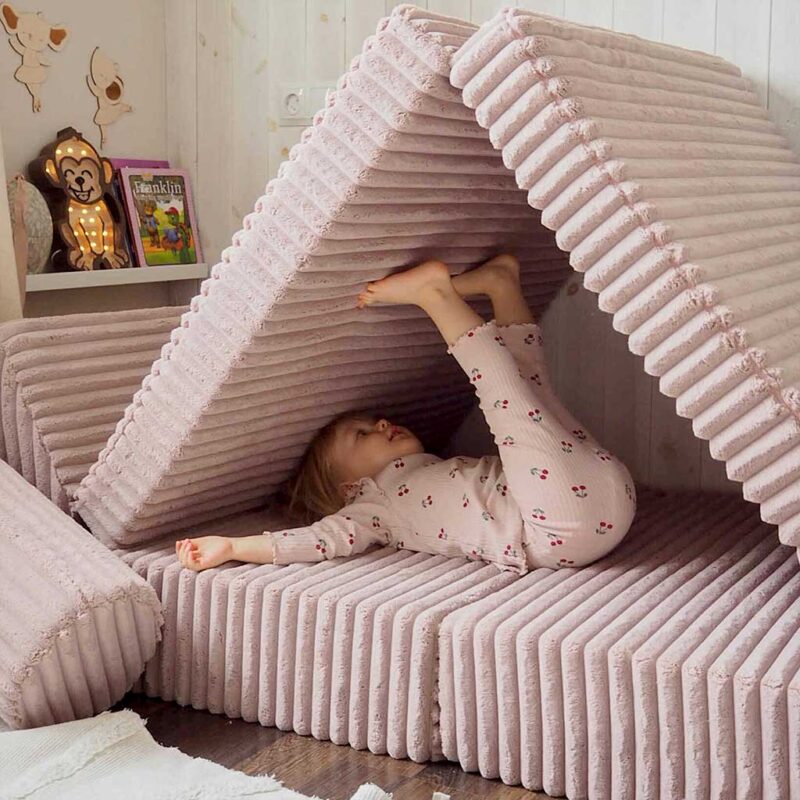
Modular play sofas and foam playsets
Modular play sofas and foam playsets are soft, configurable furniture pieces that children can stack, rearrange and climb on. They combine seating with movement-based play.
These pieces support gross motor skills, imaginative building and cooperative play. Toddlers can construct obstacle courses, tunnels or quiet reading corners.
For Irish living rooms, washable covers and durable foam are practical features. Modular designs allow reconfiguration depending on available space.
They work particularly well in shared family spaces where flexibility matters.
Ball pits
Ball pits are enclosed soft spaces filled with lightweight play balls designed for sensory exploration and movement. They encourage reaching, throwing and body awareness.
Sensory play supports coordination and spatial development. The resistance of the balls provides gentle feedback as children move.
In smaller Irish homes, compact ball pits can be placed on play mats to protect flooring. Choose BPA-free balls and washable covers for hygiene.
Play mats
Play mats provide cushioned floor protection for active toddler movement. They reduce impact from falls and protect hard flooring surfaces.
Mats are foundational in any indoor play setup. They create defined play zones and improve safety when using climbing or balancing equipment.
Look for wipe-clean or washable materials suitable for everyday family use. In many Irish homes with timber or tile floors, mats are essential rather than optional.
Balance boards
Balance boards are curved wooden boards that allow children to rock, tilt and balance using their body weight. They promote core strength and coordination.
Toddlers use them as stepping platforms, gentle rockers or imaginative props. Balance practice supports overall motor control.
They are compact and suitable for small Irish homes. Always place on a non-slip surface and supervise initial use.
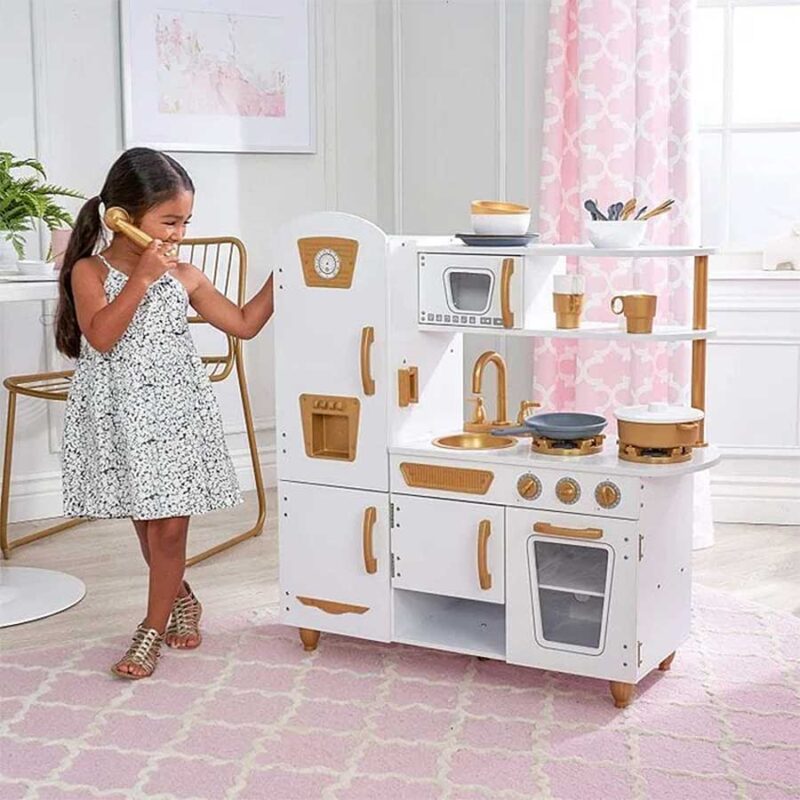
Play kitchens
Play kitchens are scaled-down role-play units that allow children to imitate cooking and food preparation. They support imaginative play and social development.
Pretend play builds language skills, sequencing and problem-solving. Many toddlers enjoy copying daily routines they observe at home.
Choose sturdy designs that withstand daily use. Position them near storage baskets to keep accessories manageable.
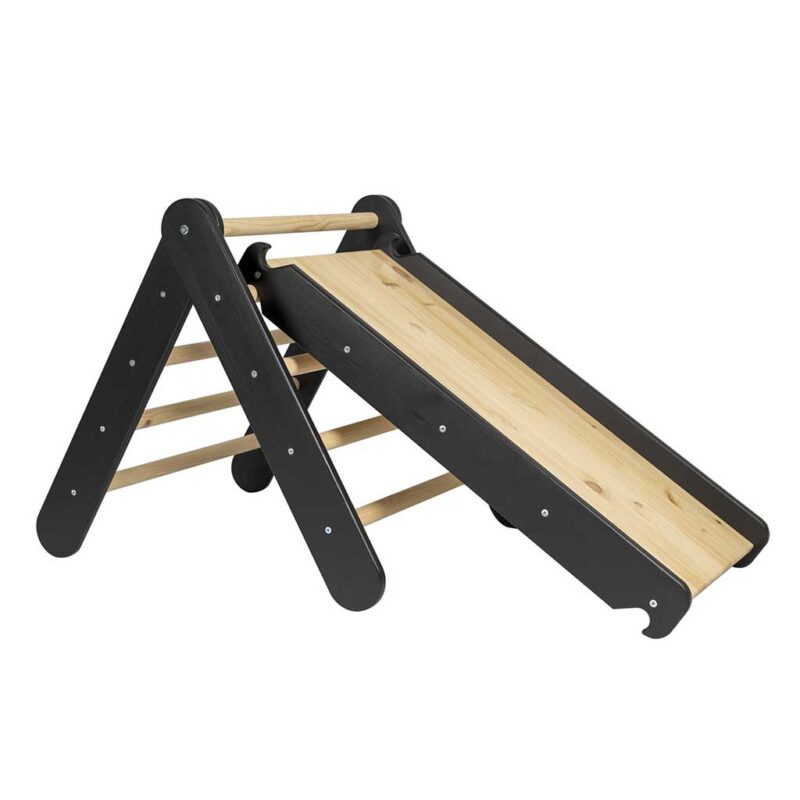
Climbing triangles
Climbing triangles are indoor wooden climbing frames designed for safe, low-height exploration. They encourage pulling, stepping and controlled climbing.
Climbing builds strength, coordination and risk assessment. Toddlers learn to judge distance and balance through repetition.
In Irish homes, foldable versions suit shared living spaces. Always place on cushioned flooring and allow children to climb at their own pace.
Indoor slides
Indoor slides provide controlled sliding experiences suitable for toddlers. They support balance, coordination and confidence.
Low-height slides designed specifically for young children are best suited to home environments. They can attach to climbing frames or stand alone.
Ensure adequate landing space and use on a mat for added stability.
Pouffes and bean bags
Pouffes and bean bags offer soft seating for rest, reading and quiet play. They create balance within an active play space.
Quiet corners help toddlers regulate energy levels. Soft seating also supports social interaction during storytelling.
Choose durable, washable fabrics suitable for everyday family life.
How do you choose the right indoor play equipment for your child?
The right equipment depends on your child’s age, temperament, available space and long-term goals.
- Age: Match height and complexity to developmental stage.
- Activity level: Active climbers benefit from movement equipment.
- Available space: Measure realistically before purchasing.
- Budget: Prioritise durable items designed for progression.
- Longevity: Choose pieces that adapt as skills improve.
Quality equipment designed for daily family use often provides better long-term value than short-lived alternatives.
Frequently Asked Questions
What age is best for a play kitchen?
Most toddlers begin enjoying play kitchens between 18 months and three years. At this stage they imitate daily routines and begin simple role-play. Choose a sturdy design with accessible height and minimal small parts.
Are balance boards safe for toddlers?
Balance boards are safe when used on a non-slip surface under supervision. Start with simple rocking movements and allow the child to explore gradually. Choose a board designed specifically for young children.
Do indoor climbing frames fit in small homes?
Many indoor climbing triangles are designed with compact footprints and foldable frames. Measure your available space carefully and use cushioned flooring beneath for safety.
How do you clean foam play equipment?
Most foam playsets have removable, washable covers. Wipe surfaces regularly and follow manufacturer guidance for deeper cleaning. Choosing washable materials makes everyday maintenance manageable.
Is a learning tower worth it?
For families who cook regularly at home, a stable learning tower can encourage independence and practical life skills. Many parents find it useful over several years when introduced safely and used consistently.
What flooring is best under toddler play equipment?
Cushioned play mats or foam tiles help reduce impact and protect hard floors. Ensure they sit flat without gaps to prevent tripping.
How much space do you need for an indoor play area?
Even a small corner can work effectively if equipment is chosen carefully. Modular pieces and vertical storage allow flexibility in apartments or shared rooms.
Final Thoughts
A thoughtfully designed indoor play area supports movement, independence and creativity during the most formative years of childhood. In Ireland, where indoor time is often unavoidable, creating a safe and adaptable space at home can make daily life calmer and more engaging for both parent and child.
Investing in durable, well-designed equipment suited to your home layout allows your child to develop confidence through active play. If you are planning your own indoor play space, exploring a carefully selected range of toddler play equipment designed for everyday family use in Ireland can help you build a practical and lasting setup.
Visit ShopStreet Kids

